
Parent of substance abusers can relate to Reiner Family’s Concerns.
KFF, formerly the Kaiser Family Foundation, states that two-thirds of families say either they or a family member have been addicted to alcohol or drugs, experienced homelessness or experienced a drug overdose. Furthermore, one in five adults experience mental health struggles. (I’m surprised the latter figure’s not a higher number).
By now, everyone knows about the murder of Rob & Michele Reiner.
I can’t attest to middle son, 32, Nick Reiner’s metal health conditions, especially at the time he allegedly murdered his well-liked parents director & actor Rob Reiner and his wife producer and photographer Michele Reiner. We know that Nick had addiction problems starting at age 15 and had been to rehabs numerous times.
He had lived in his parents’s Brentwood guesthouse and according to the movie “Being Charlie,” a loose autobiographical documentary written by Nick and other rehab patients and directed by his father, Nick used the Reiner’s beach house when they weren’t there. He was addicted to heroin and methamphetamine, a stimulant, and lived on the streets as well, as the Netflix movie relays. He admitted that he trashed his parent’s guesthouse when he had been up for days: he punched the television and destroyed the furniture. Prior to the party, Michele had confided in her friends that she was concerned about her Nick.
The night of the murder Nick went to Conan O’Brien’s Christmas party with his parents. Prior to the party, Michele had confided in her friends that she was concerned about Nick..He was described as “out of it” at the party. He was asking guests if they were famous. He got into a loud argument with his parents. Back at the Reiner’s house, he murdered his parents with a kitchen knife. His younger sister, Romy, found her parents grisly murdered. Romy called her brother “dangerous.”
Nick was later picked up by cops and was booked. He is now in prison. I am not a mental health therapist so I’m not going to venture why Nick did this ghastly deed, thirty years after the Menendez Brothers killed their wealthy parents in California.
Similarities of Parents with Addicted Children
The Reiners tried many avenues to rehabilitate Nick, just as we did with our son Graham. We tried multiple rehabs: close to home, in secluded spots, where he was taken to them reluctantly. Like Nick and Paris Hilton, we were told to have an escort basically kidnap Graham in the middle of night and deliver him to a “behavior modification” or “emotional growth” school for eighteen months in Georgia. It was recommended by an independent school counselor.
As in the movie “Being Charlie,” a loosely based autobiographical movie, co-written with Nick ‘s fellow abusers in rehabs and directed by his father Rob, each time he went to rehab, he felt as if he was being “punished” rather than helped. Our son Graham felt the same way. Because he was adopted, he felt as if he was being given up again. As Graham said, “every time there’s a problem you throw money at it.”
When you can’t “fix” the problem, you succumb to the experts with “the diploma on the wall.,” as Rob Reiner said, especially if you can afford them. You’re told to not enable the wild child, you must let him hit rock bottom. I never let our son hit “rock bottom.” We would bail him out. Otherwise, we would worry about his safety.
I kicked him out of the house once because I found drugs in his bedroom, but then felt guilty and let him stay at a run-down Howard Johnson’s in town and drove him to see his psychiatrist before he was going to another rehab. Maybe that one would work, please God!
Back East, nothing worked. He stole money from us, was manipulative, and all safety nets failed: the high school allowed him to get out of class with a slip from the nurse, he was allowed to leave the campus.
He was introduced to hard drugs by a girl he had known at kindergarten. She later died of an overdose. He drove without a license and would wrestle with my husband for car keys.
He never struck me.
However, Graham’s younger sister, also adopted, had to call the police once as he under the influence, he was violent. His psychiatrist didn’t believe that he was “gay.” He was bullied at school. The school, the doctor, the police, could have been more vigilant. They had failed, but I thought so had we.
No wonder parents feel helpless. Maybe it’s up to the parents to hold the child accountable, but it’s difficult when you’re in a new position of dealing with a problem that makes you feel shameful. So, you tell white lies about his jobs, etc. to a few close friends.
He would stay the 28 days at rehabs and then start up again with his daily regimen of illicit drugs. He stopped going to a psychiatrist in California because the therapist tried to get us involved long-distance without Graham’s permission. It’s a HIPPA violation.
He had bouts of sobriety, when he was his usual amusing smart self. When not on drugs, he looked so handsome. Self reflective, he once asked his aunt “why am I like this?” after relapsing several times. He died in California at age thirty-three. As his prudent sister, five years younger rationalized, “Graham didn’t want to do the work of getting sober.”
He probably would have died sooner had fentanyl been around. He could afford what he wanted. Like Nick confessed in the “Being Charlie,” “rehabs don’t work for me,” “I just wanted to kill the noise.”
See NYTimes article The Reiner’s Struggled with Their Son’s Addiction. These Families Can Relate
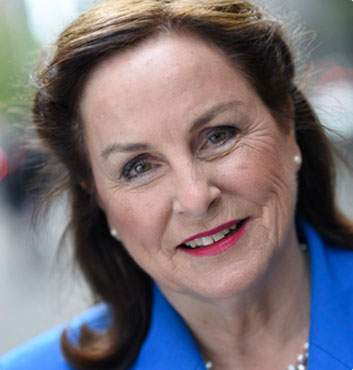
Wesley Cullen Davidson
Wesley Cullen Davidson is an award-winning freelance writer and journalist specializing in parenting. Currently, she is targeting her writing about recovery to parents whose children have substance abuse disorders.